The Kratom Bible: Complete Guide to Strains, Effects & Usage

Wouldn't it be great to find everything you could ever want to know about kratom in one place? That's exactly what this guide is for. The team here at Kingdom Kratom has pulled together the science, the strain breakdowns, the history, and the practical know-how into a single reference. Bookmark this page and come back often, we update it as new information comes to light.
What Is Kratom?
The kratom tree, known botanically as Mitragyna speciosa, is a tropical evergreen native to the rain forests of Southeast Asia. It grows wild across Indonesia, Malaysia, Thailand, Myanmar, and Papua New Guinea, where farmers have harvested its leaves for centuries. The plant belongs to the same family as the coffee tree (Rubiaceae), which explains why low doses can feel mildly stimulating.
The active compounds inside the leaf are called alkaloids. The two most studied are mitragynine and 7-hydroxymitragynine (often shortened to 7-OH). Mitragynine is by far the most abundant alkaloid in a natural kratom leaf and is responsible for most of the reported effects. 7-OH appears only in trace amounts in unadulterated kratom, and at Kingdom Kratom we focus on mitragynine-forward, naturally balanced products rather than the high-7-OH spiked goods flooding parts of the market.
A Short History of Kratom
Kratom has been part of Southeast Asian life for hundreds of years. Farmers and laborers traditionally chewed fresh leaves to push through long workdays in the heat, while older generations brewed the leaves into tea for relaxation in the evening. Western interest is more recent, picking up momentum in the late 1990s and early 2000s as travelers and researchers brought knowledge of the plant back home.
Kratom Strains and Vein Colors Explained
Kratom is sorted by two things: the region where the leaf is grown (Bali, Maeng Da, Borneo, Malay, Thai, Vietnam, Samarinda, Horn) and the color of the central vein in the leaf at harvest. Vein color reflects the maturity of the leaf and the drying process, and it strongly influences the reported effects.
Red Vein Kratom
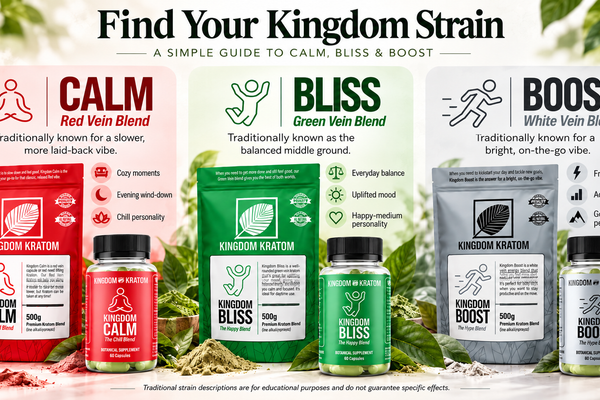
Red vein leaves are the most mature at harvest. Red strains are reported to promote calm, comfort, and easier evenings. Popular options include Red Bali, Red Maeng Da, and Red Bentuangie. If you want a deeper look at red strains, the Red Bentuangie Kratom Powder is a good starting point for fermented-leaf character.
Green Vein Kratom
Green vein kratom sits in the middle of the maturity spectrum. It is widely reported to support a balanced lift, clearer focus, and a sociable mood without the heaviness some users associate with reds. Browse the full Green Vein Kratom selection or start with Green Maeng Da Kratom, one of the most talked-about strains in the kratom community.
White Vein Kratom
White vein leaves are harvested earliest. White strains are reported to feel the most energizing and are often used by people who reach for kratom in the morning or before a workout. The White Horn Kratom Powder and White Samarinda Kratom Powder are two of the standout whites in our lineup.
Yellow and Gold Vein Kratom
Yellow and gold strains are produced through specialized drying techniques, sometimes blending vein colors or using extended sun-drying. They tend to land somewhere between green and red on the effect spectrum. Yellow Borneo Kratom and Gold Bali Kratom are reader favorites.
What Does Maeng Da Mean?
Maeng Da loosely translates to "pimp grade" in Thai. It started as slang used by farmers and merchants to describe higher-quality leaf with a richer alkaloid profile. Today, Maeng Da is available in red, green, and white veins and remains one of the most requested kratom names worldwide.
Kratom Forms: Which One Is Right for You?
Kratom comes in several formats, and each has a place depending on your routine.
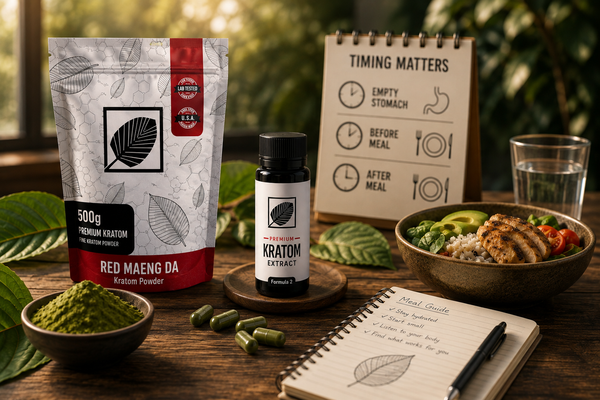
- Powder. Fine, ground leaf. The most flexible and cost-effective format, especially when you are buying larger sizes. See the full Green Vein Kratom Powder range as an example.
- Capsules. Pre-measured, taste-free, and travel-friendly. Our premium kratom capsules are filled with the same high quality leaf as our powders.
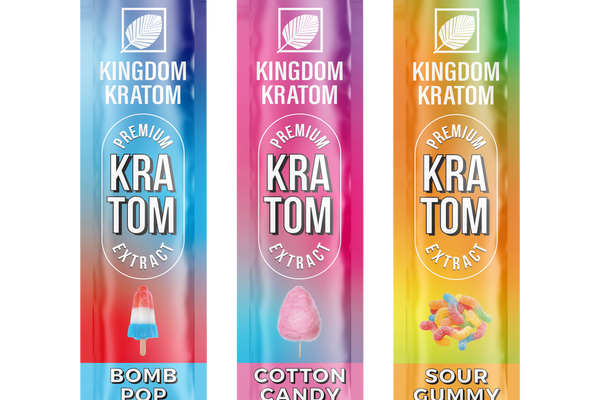
- Extracts. Concentrated forms made by reducing leaf material down to its alkaloid-rich resin or powder. A little goes a long way.
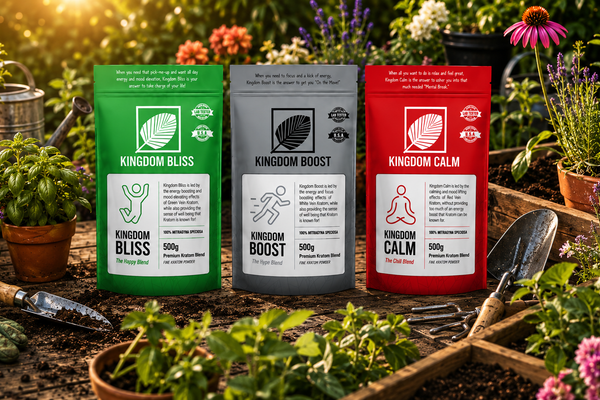
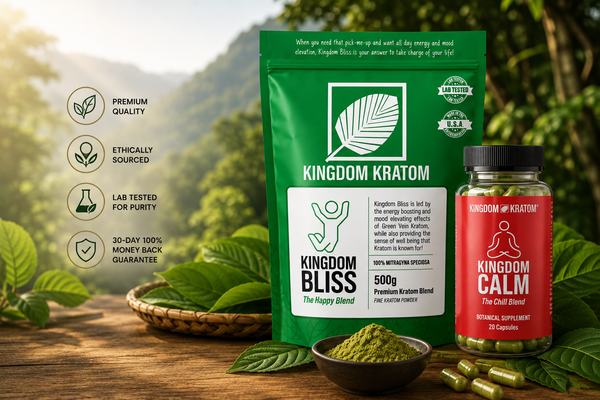
- Blends. Effect-focused mixes like Bliss, Boost, Calm, and Burst. Explore Kratom Blends if you prefer a guided experience over picking strains yourself.
- Sample packs. The easiest way to try multiple strains side by side. Grab a Kratom Sample Pack if you are new or want to compare veins.
How to Use Kratom Powder
There are several ways people take kratom powder, and the best method usually comes down to personal preference.
- Toss and wash. Place a measured dose on your tongue and wash it down with juice or water. Fast, but the taste is earthy.
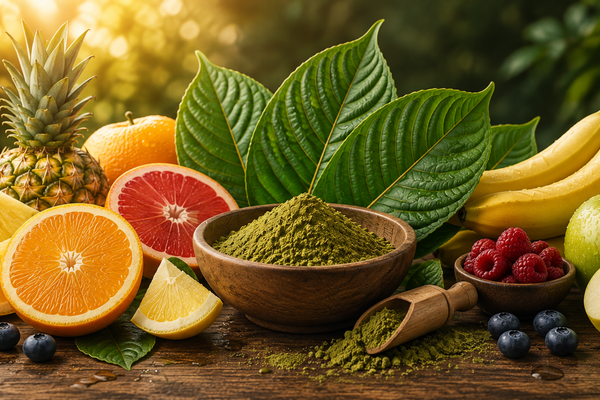
- Mix into a drink. Stir the powder into orange juice, a smoothie, or chocolate milk. Citrus is reported to help with absorption and masks the bitterness.
- Kratom tea. Simmer powder in water with a squeeze of lemon for about 15 minutes, strain, and sweeten to taste.
- Capsules. If the taste is a dealbreaker, capsules skip it entirely.
Kratom Dosage Guidelines
Dosage is personal and depends on your tolerance, body weight, and the strain you are using. As a general reference point used across the kratom community:
- 1 to 2 grams: Threshold dose, often reported as mildly stimulating.
- 2 to 4 grams: Low to moderate, commonly used for daytime energy and focus.
- 4 to 6 grams: Moderate, often reported to support relaxation and comfort.
- 6 to 8 grams: Higher range, reported as more sedating.
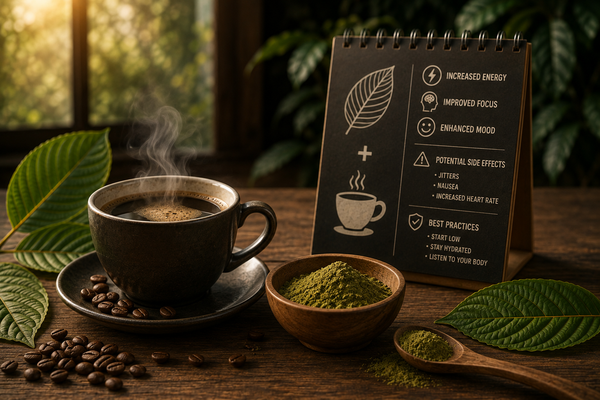
Start low, give your body 30 to 45 minutes to respond, and adjust from there. More is not always better with kratom, and many regular users find that smaller, consistent doses feel best.
Kratom Alkaloids: Mitragynine vs 7-Hydroxymitragynine
Natural kratom leaf contains more than 40 alkaloids, but mitragynine is the headliner, usually making up around 1 to 2 percent of the dried leaf. 7-hydroxymitragynine is present in trace amounts, typically well under 0.05 percent in unadulterated leaf.
Recently, some companies have started spiking products with concentrated 7-OH at levels far above what the plant produces on its own. We do not promote or sell those products. High-dose 7-OH is highly habit-forming and is a leading reason kratom is facing regulatory pressure around the country. At Kingdom Kratom, the focus is on mitragynine-forward leaf and extracts that reflect the plant's natural balance.
Is Kratom Legal?
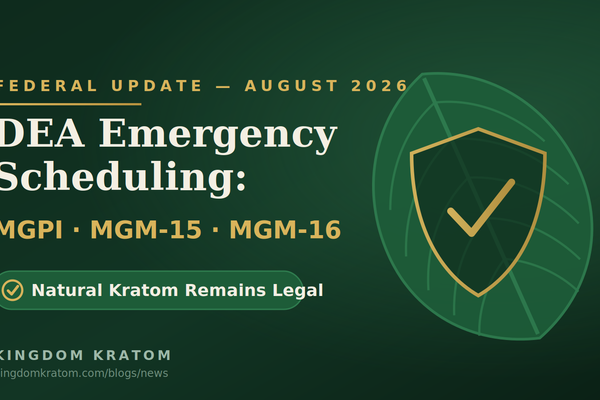
Kratom is legal at the federal level in the United States, but a handful of states and municipalities have their own restrictions. Before ordering, check your local laws. Kingdom Kratom only ships to areas where kratom is legal.
What to Look For in a Quality Kratom Vendor
Not every vendor takes the same care with sourcing and testing. When you are shopping for kratom online, look for:
- American Kratom Association GMP compliance. Kingdom Kratom is one of the few AKA-GMP qualified vendors operating out of an FDA-registered manufacturing facility.
- Third-party lab testing. Every batch should be tested for alkaloid content, heavy metals, and microbial contaminants.
- Transparent sourcing. Our leaf is grown and harvested in the jungles of Southeast Asia with no additives.
- A real guarantee. We back every order with a no questions asked money-back guarantee and free shipping on orders over $75.
Choosing Your First Strain
If you are brand new, here is a simple way to pick a starting point based on what you want to feel:
- Calm and comfort in the evening: Red Bali or Red Bentuangie.
- Balanced lift during the day: Green Malay or Green Maeng Da.
- Morning energy and focus: White Horn or White Maeng Da.
- Something in between: Yellow Borneo or Gold Bali.
Still not sure where to start? A sample pack lets you compare a few strains side by side before committing to a larger size.