What Is Kratom? A Complete Guide to the Plant, Alkaloids & Uses

A complete beginner's guide from the Kingdom Kratom team · Updated July 2026
Quick answer: Kratom (Mitragyna speciosa) is a tropical evergreen tree in the coffee family, native to Southeast Asia. Its leaves naturally contain alkaloids — primarily mitragynine — and have been used for centuries in the region. Today the dried leaf is sold as powder, capsules, and extracts. It is legal at the U.S. federal level (though banned in some states) and is not approved by the FDA for human consumption.
“What is kratom?” is the question we hear more than any other. There's a lot of noise online, so here's a clear, honest, and complete answer — what the plant actually is, what's inside it, the different types you'll see, how people use it, and where it stands legally. We've sold lab-tested kratom since 2017, and our goal here is simply to explain it straight.
What is kratom?
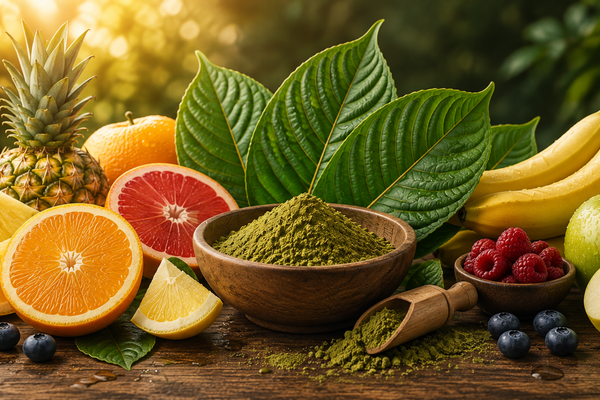
Kratom is the common name for Mitragyna speciosa, a tropical evergreen tree that belongs to the Rubiaceae family — the same botanical family as coffee. It grows naturally in the hot, humid rainforests of Southeast Asia, and its large green leaves are the part people use. For generations, laborers and farmers across Thailand, Malaysia, and Indonesia chewed the fresh leaves or brewed them into tea as part of daily life and traditional customs. In the last couple of decades, kratom has become widely available in the United States and Europe, usually as a dried, milled powder.
In plain terms: kratom is a plant leaf, dried and ground, much like many other botanical products. What makes it distinct is its natural alkaloid content.
Where does kratom come from?
Nearly all commercial kratom is grown in Indonesia — especially the island of Borneo and the region around West Kalimantan — along with parts of Malaysia and Thailand. The equatorial climate, rich soil, and high humidity produce mature leaves with robust alkaloid profiles. After harvest, the leaves are dried (indoors, outdoors, or a mix, which influences the final “vein color”), then milled into a fine powder and exported. Where and how a leaf is grown and dried is a big reason two kratom products can feel different from one another.
What is kratom made of? The alkaloids
Kratom leaves contain more than 40 naturally occurring alkaloids. Two get almost all the attention:
- Mitragynine — the most abundant alkaloid in natural leaf and the compound most associated with kratom. In dried leaf, mitragynine is the dominant alkaloid by a wide margin.
- 7-hydroxymitragynine (7-OH) — present in the raw leaf only in tiny, trace amounts. Research indicates both alkaloids interact with the body's opioid receptors, and 7-OH is far more potent by weight than mitragynine.
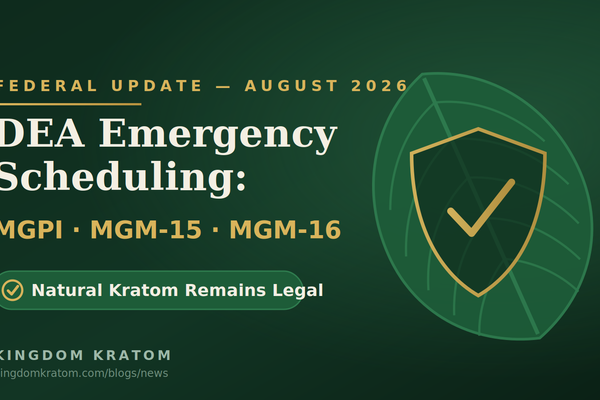
This distinction matters more than almost anything else in the kratom world right now. Natural leaf is mitragynine-dominant with only trace 7-OH. Separately, some manufacturers sell concentrated or semi-synthetic 7-OH products — tablets, gummies, and shots engineered to be dramatically more potent than the plant. Those concentrates are a different product and are increasingly restricted by states and, as of July 2026, targeted by the DEA — while natural leaf remains legal. We explain that fully in what the DEA's 7-OH scheduling really means, and you can go deeper on the chemistry in our guide to kratom alkaloids.
Kratom vein colors and strains
If you've browsed kratom, you've seen colors and place-names — Green Maeng Da, Red Bali, White Borneo, and so on. Here's what those mean.
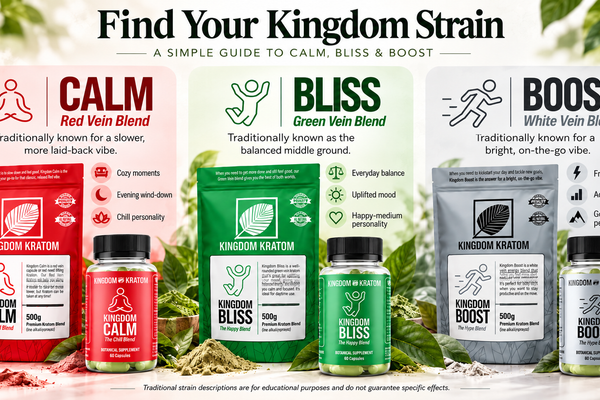
Vein colors refer to the color of the leaf's central vein and stem, which shifts with the leaf's maturity and how it's dried:
- Red vein — the most popular category overall.
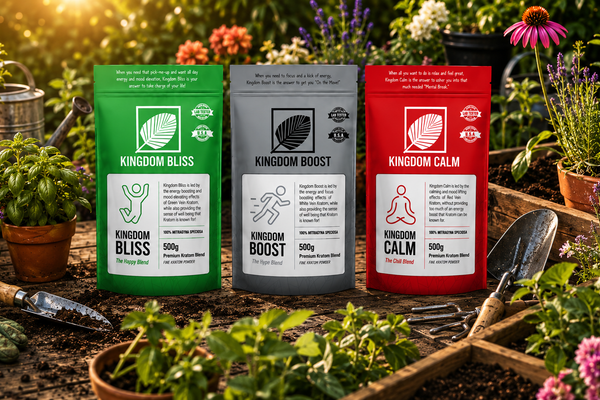
- Green vein — often considered the balanced, middle-ground option.
- White vein — associated with morning and daytime routines.
- Yellow vein — typically the result of a specialized drying or blending process.
Strain names usually point to a growing region or leaf type — Bali, Borneo, Sumatra, Maeng Da (a term for select, high-quality leaf), and others. We break the whole system down in our kratom color guide and our overview of kratom types and strains. People describe different veins and strains differently, and preference is personal — many customers start with a sample pack to compare.
What forms does kratom come in?
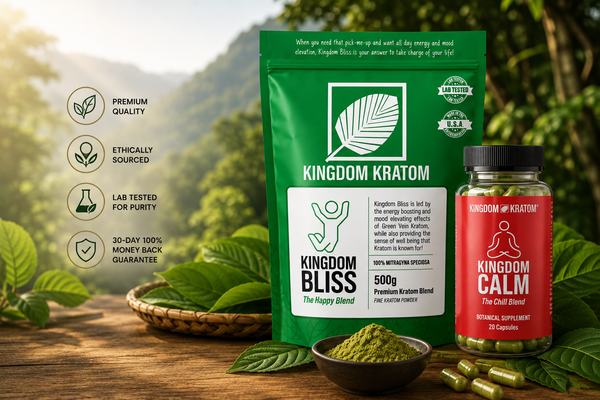
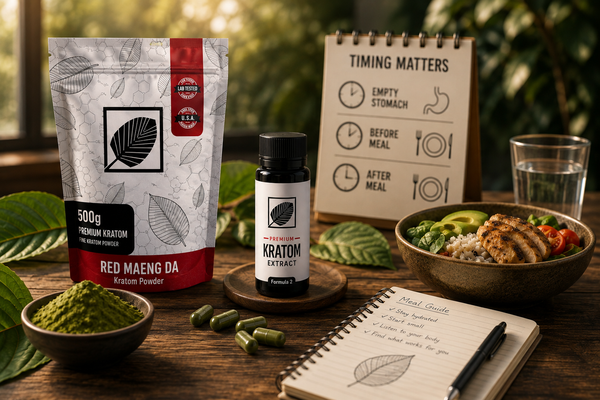
- Powder — finely milled dried leaf; the most traditional and versatile form.
- Capsules — pre-measured powder in a capsule; convenient and taste-free.
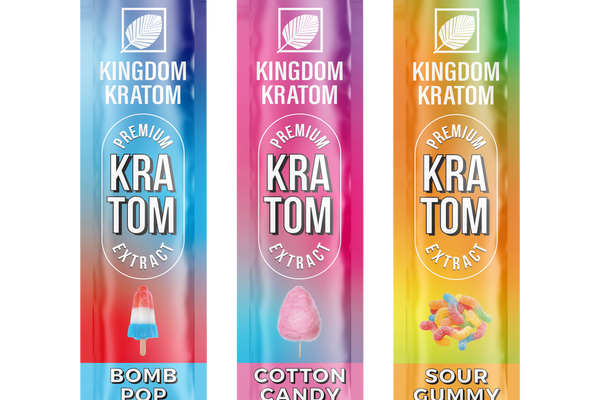
- Extract — a concentrated form made by extracting alkaloids from leaf; more potent than plain powder. See our comparison of extract vs. powder.
How do people use kratom?
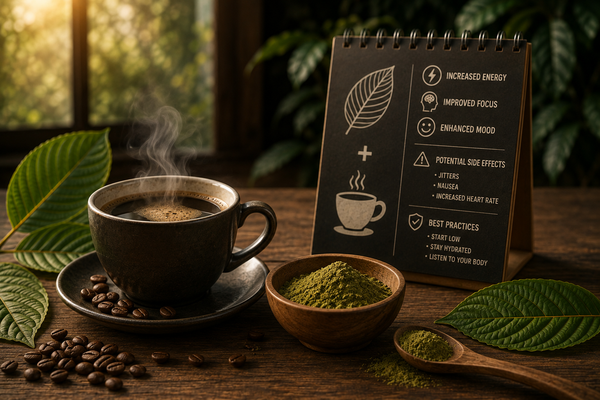
Traditionally, Southeast Asian laborers chewed fresh leaves or brewed them as tea. Today, most people use dried powder. Common methods include the “toss and wash” (placing powder in the mouth and washing it down with liquid), brewing kratom tea, mixing powder into a drink, or simply taking capsules. Our full how-to-use guide walks through each method. Everyone's different, so if you're new, it's wise to start low and go slow — our dosage guide covers general considerations, and you should always follow product labeling.
Is kratom legal?
At the federal level, kratom is legal in the United States — it is not a controlled substance, though it is not FDA-approved for human consumption. Legality at the state level varies a lot: most states allow it, a handful ban it outright, and a growing group restricts concentrated 7-OH while keeping natural leaf legal. Because the map changes often, we keep a live, color-coded breakdown: see Is Kratom Legal? Our 2026 state-by-state map to check your state before you buy.
Is kratom safe? What you should know
We believe in being straight with you. Kratom is a natural botanical, but “natural” does not mean risk-free, and we make no health or medical claims about it. A few honest points:
- Kratom is not approved by the FDA for human consumption, and U.S. health agencies have raised safety concerns.
- Like caffeine and many other substances, kratom can be habit-forming if used irresponsibly, and some people report withdrawal-type effects when stopping after heavy, regular use.
- It should not be used by anyone under 18 (or 21, depending on your state), or by people who are pregnant or nursing.
- If you have a medical condition or take prescription medications, talk to a doctor before using kratom, as interactions are possible.
- Avoid concentrated or synthetic 7-OH products — they're a different, far more potent category than natural leaf and are increasingly restricted.
Using any botanical responsibly starts with good information and a quality product.
How to choose quality kratom
Because kratom isn't federally standardized, the seller matters enormously. Look for a vendor that:
- Publishes third-party lab results for contaminants and alkaloid content.
- Follows Good Manufacturing Practices (GMP) and honest labeling.
- Sells natural leaf — not spiked or concentrated 7-OH products.
- Verifies age and ships only where kratom is legal.
That's the standard we've held since 2017. You can explore our full lab-tested kratom shop, or go deeper with The Kratom Bible, our complete guide to strains, effects, and usage.
Frequently asked questions
What is kratom, in simple terms?
Kratom is the dried leaf of the Mitragyna speciosa tree, a coffee-family plant from Southeast Asia. It's sold as powder, capsules, and extract, and contains natural alkaloids — mainly mitragynine.
Is kratom a drug?
Kratom is a botanical (a plant product), not an FDA-approved drug or medicine. It is not a federally controlled substance in the U.S., though some states restrict or ban it.
What is kratom made of?
Just dried, milled kratom leaf. The leaf naturally contains 40+ alkaloids, dominated by mitragynine, with only trace 7-hydroxymitragynine (7-OH).
What does kratom feel like?
Experiences vary by person, strain, and amount, and we don't make effect claims. Many users compare notes on different veins — see our overview of what kratom feels like for a neutral rundown.
Is kratom legal where I live?
It's federally legal but varies by state. Check our state-by-state kratom legality map.
Is kratom addictive?
Kratom can be habit-forming if used irresponsibly, and some regular users report withdrawal-type effects. Use it thoughtfully, and speak with a healthcare professional if you have concerns.
This guide is general educational information, not medical or legal advice. These statements have not been evaluated by the FDA. Kratom products are not intended to diagnose, treat, cure, or prevent any disease, and are not for use by anyone under 18 or 21 depending on jurisdiction, or by those who are pregnant or nursing. Consult a physician before use. Kingdom Kratom makes no health or therapeutic claims about kratom.