Kratom vs. Coffee: Which Natural Stimulant Is Right for You?

Kratom and Coffee: Two Plants from the Same Family
Kratom and coffee come from the same botanical family, Rubiaceae, also known as the coffee plant family. Both grow as evergreen trees in tropical climates, both contain alkaloids that act on the body, and both have been used for centuries by working people who needed a natural lift. The similarities run deeper than most folks realize, and so do the differences.
If you reach for a cup of coffee every morning out of habit, you owe it to yourself to understand how kratom compares. The team here at Kingdom Kratom gets this question constantly: is kratom related to coffee, and could it replace your daily brew? Short answer, yes and sometimes.
Is Kratom Related to Coffee?
Yes. Both kratom (Mitragyna speciosa) and coffee (Coffea arabica and Coffea robusta) belong to the Rubiaceae family. They are botanical cousins. Kratom grows wild in the jungles of Southeast Asia, primarily Indonesia, Thailand, Malaysia, and Borneo, while coffee is cultivated across the equatorial belt from Ethiopia to Colombia to Vietnam.
The leaves of the kratom tree and the cherries of the coffee plant both produce active compounds that humans have used for energy, focus, and social ritual for hundreds of years. Farmers in Thailand chewed fresh kratom leaves to push through long days in the rice paddies. Ethiopian goat herders, as the old story goes, noticed their animals dancing after eating coffee cherries. Both plants entered human history through working hands looking for stamina.
Coffee: The World's Favorite Stimulant
Coffee is consumed at a rate of over 400 billion cups per year worldwide. It contains caffeine, a central nervous system stimulant that blocks adenosine receptors in the brain and keeps you feeling alert. A standard 8 oz cup of brewed coffee has roughly 95 mg of caffeine, while a shot of espresso comes in around 63 mg.
Coffee's appeal is obvious. It is cheap, available everywhere, and it works fast. The caffeine kick hits within 15 to 45 minutes and peaks around the one hour mark. But coffee has tradeoffs that anyone who has stared at the ceiling at 2 a.m. already knows:
- Jitters and anxiety at higher doses
- An afternoon crash once the caffeine wears off
- Disrupted sleep when consumed past mid-afternoon
- Tolerance buildup that pushes you toward more cups
- Stomach acidity and digestive discomfort
Kratom: A Different Kind of Lift
Kratom has its own set of active alkaloids, the most studied being mitragynine and 7-hydroxymitragynine. Unlike caffeine, mitragynine interacts with the body in a more nuanced way, and the effects shift based on the strain, the vein color, and the dose.
At lower doses, white and green vein kratom strains are reported to promote alertness, mood elevation, and sociability. This is where the kratom-as-coffee-alternative comparison gets interesting. Many longtime kratom users describe a smoother, longer-lasting energy without the spike-and-crash pattern of caffeine.
At higher doses, kratom shifts toward relaxation and physical comfort, which is something coffee never does. That dose-dependent split is one of the biggest functional differences between the two plants.
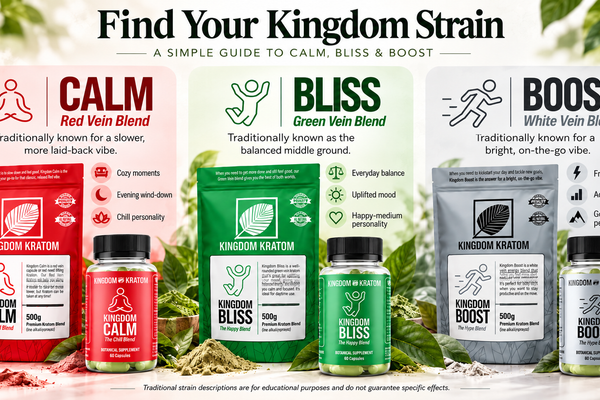
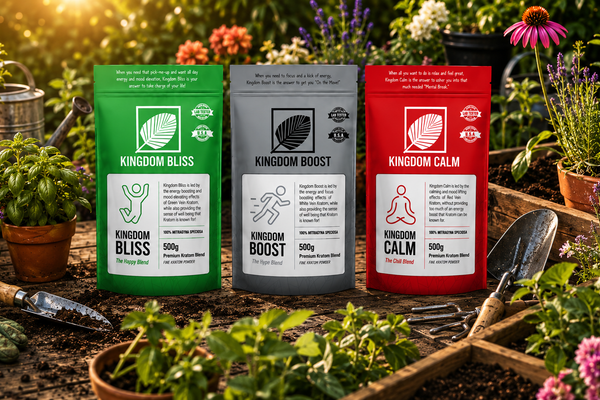
White Vein Kratom for Morning Energy
If you want the closest kratom equivalent to a strong cup of coffee, white vein strains are the place to start. They are harvested from young kratom leaves and carry the most stimulating alkaloid profile of the three primary vein colors. Strains like White Horn and White Samarinda are popular morning picks. Browse the full lineup of kratom for energy to see what fits your routine.
Green Vein Kratom for Balanced Focus
Green vein strains sit in the middle of the spectrum. They offer a noticeable lift without the edge that some people get from pure caffeine or from heavier white veins. Green Maeng Da and Green Malay are two of the most popular options for steady, all-day focus. The green vein kratom collection is a solid starting point for newcomers who want energy without the jitters.
Kratom vs Coffee: A Direct Comparison
| Factor | Coffee | Kratom |
|---|---|---|
| Active compound | Caffeine | Mitragynine, 7-hydroxymitragynine |
| Onset | 15 to 45 minutes | 20 to 45 minutes |
| Duration | 3 to 5 hours | 4 to 6 hours |
| Effect type | Pure stimulation | Dose-dependent, energy or relaxation |
| Crash | Common | Reported to be milder |
| Tolerance | Builds over weeks | Builds faster, strain rotation helps |
Does Kratom Have Caffeine?
No. Kratom does not contain caffeine. The energizing effects of white and green vein kratom come from mitragynine and the dozens of other alkaloids in the kratom leaf, not from any caffeine content. We get this question often, and it matters because some people are looking specifically to cut caffeine without losing the morning lift. Kratom gives you that option.
Can You Mix Kratom and Coffee?
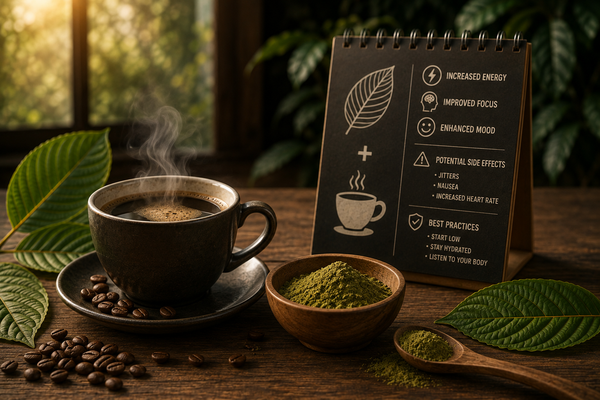
Plenty of kratom users do combine the two, and the most common method is stirring kratom powder into a hot or iced coffee. The caffeine adds an extra layer of stimulation on top of a white or green vein kratom dose, and the bitter notes of coffee help mask the strong flavor of kratom powder.
A few honest words of caution. Stacking caffeine on top of a stimulating kratom strain can intensify both effects, including the less pleasant ones like jitteriness, racing heart, and digestive upset. Start with a smaller kratom dose than usual if you plan to mix, and see how your body responds before scaling up.
For a smoother combination, some users prefer pairing coffee with a green vein kratom, which is less likely to push them into overstimulation. If you want to skip the powder taste entirely, premium kratom capsules are an easy way to take your dose with your morning brew.
Which One Is Right for You?
Coffee is hard to beat for convenience, cost, and a quick caffeine hit. But if you have hit the wall with caffeine, if the crashes are getting worse, if the jitters are showing up earlier in the day, kratom is worth a serious look. The energy is reported to feel cleaner, the duration is longer, and the dose-dependent flexibility means one plant can support a busy morning and a relaxed evening.
New to kratom? Start with a kratom sample pack to try several strains side by side. It is the cheapest way to figure out which vein and origin works best for your body before committing to a larger bag. You can also browse the full kratom powder selection if you already know what you are looking for.
Frequently Asked Questions
Is kratom stronger than coffee?
Kratom and coffee work through different mechanisms, so a direct strength comparison is tricky. Most users report that the energy from white vein kratom feels stronger and lasts longer than a single cup of coffee, with less of an afternoon crash.
Can kratom replace my morning coffee?
For many users, yes. White and green vein kratom strains are reported to provide alertness, mood elevation, and focus without caffeine. Some people switch entirely, others alternate between the two.
Is it safe to drink coffee with kratom?
Many kratom users combine the two without issue, but the effects stack. Start with a lower kratom dose when pairing with coffee, and avoid combining if you are sensitive to caffeine or prone to anxiety.
How much kratom equals a cup of coffee?
There is no exact equivalence because the active compounds are different. A typical low-to-moderate kratom dose for energy is 2 to 4 grams of powder, and this is roughly comparable to one strong cup of coffee for most users.
Does kratom give you a crash like caffeine?
Kratom is reported to produce a much milder comedown than caffeine. Heavy daily use can build tolerance, so rotating strains and taking occasional breaks helps keep effects consistent.
Every bag and bottle from Kingdom Kratom is backed by a no questions asked money-back guarantee, grown and harvested in the jungles of Southeast Asia, with no additives. Free shipping on orders over $75.