Kratom vs. Caffeine

Kratom vs. Caffeine
Caffeine has been perking humans up for millennia. Tea drinkers date back to 3000 BC in China, and the first coffee is thought to have been consumed in Ethiopia in the 9th Century. Caffeine is nothing new.
Of all the forms caffeine takes, such as tea, coffee, sodas, and energy drinks, coffee is the most popular. It is estimated that 2.5 billion cups of coffee are consumed daily worldwide.
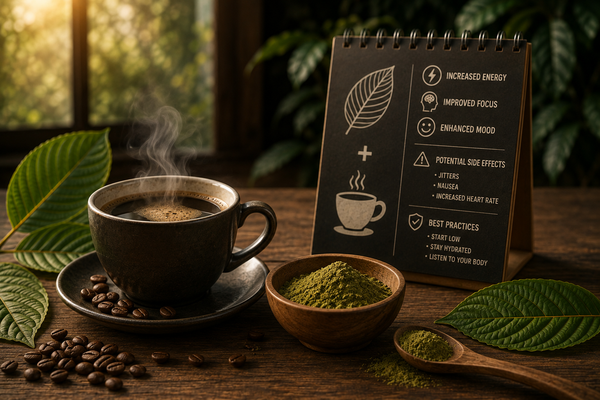
Caffeine is loved for its stimulant properties. Another natural stimulant is kratom, and many people are starting to replace, alternate, or blend their morning cup of Joe with kratom. We will look deeper at how caffeine and kratom compare so you know how and when to use them to kick-start your morning and stay focused during your workday.
In this article, you will learn:
- What is caffeine?
- What is kratom?
- Does kratom contain caffeine?
- Is kratom related to coffee?
- Kratom vs. coffee benefits
- Can you mix coffee and kratom?
- What are the best kratom strains to mix with coffee?
- How to blend coffee and kratom
What is caffeine?
Caffeine is a bitter white powder derived from coffee beans, cacao beans, tea leaves, kola nuts, yerba mate, and guarana. It is an alkaloid that acts as a natural insecticide in these plants. In humans, it helps to boost energy and focus, improve memory, and decrease fatigue and appetite.
According to the FDA, the recommended daily caffeine allowance is 400 milligrams. This equates to 4.2 cups of home-brewed coffee, 2.2 cups of coffee shop coffee, 8.5 cups of black tea, or 16.6 cups of green tea.
What is Kratom?
Kratom, or Mitragyna speciosa, is a tropical tree of the coffee family that grows predominantly in Southeast Asia. Its leaves contain the active alkaloids mitragynine and 7-hydroxymitragynine. Up to 2% of the leaves contain mitragynine, which is responsible for kratom’s soothing properties. The leaves also contain a lower amount of 7-hydroxymitragynine, which is more potent and responsible for its stimulant properties.
The strength of the different alkaloids in kratom depends on where the plant is grown, how mature it is, and the soil conditions. A tree that grows in soil with a higher nitrogen content produces more potent alkaloids.
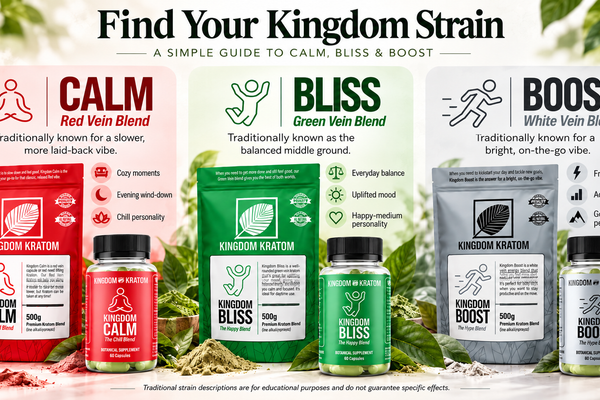
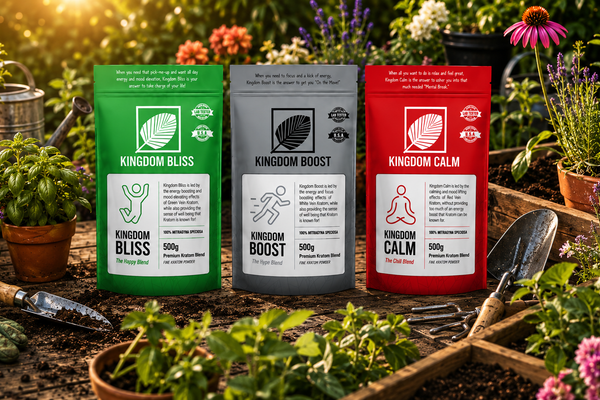
There are three colors of kratom, which denote the color of the veins in the leaf: white, green, and red. White vein kratom tends to have a higher amount of 7-hydroxymitragynine and is more stimulating. Green and red vein kratom tend to have higher levels of mitragynine so that they can have soothing properties. There is also yellow/gold kratom, created using a different drying technique.
The dosage of kratom determines its effects. If you take a small dose, you’ll likely experience a stimulating, perking-up effect reminiscent of drinking a strong coffee. In larger doses, the effect tends to be more calming.
Does kratom contain caffeine?
Kratom does not contain caffeine. If you are trying not to overdo your caffeine intake but still need a pick-me-up, you can alternate between caffeine and kratom. Alternating them will also help slow the building up of a tolerance to either.
Is kratom related to coffee?
Kratom and coffee come from the coffee plant or Rubiaceae family of trees. However, coffee trees are smaller, and the alkaloid caffeine is found in the pits of their fruit (beans). Conversely, kratom trees are larger, and their alkaloids are found in their leaves. Coffee trees are grown mainly in East and West Africa, South America, and some parts of Asia, while kratom trees are grown predominantly in Southeast Asia.
Kratom vs. coffee benefits
The difference in terms of effects is that caffeine is purely a stimulant. In contrast, the alkaloids in kratom can give a sense of well-being, enhance mood, help manage anxiety or stress, aid with sleep, or provide soothing relief from discomfort. Depending on your vein, strain, and dosage, they can act as stimulants or provide a calming effect.
Can you mix kratom with coffee?
You can choose to replace coffee with kratom to start your day fully, alternate between coffee and kratom to avoid building a tolerance or having too much of either, or mix the two (with care). For a step-by-step guide, read Can You Mix Kratom With Coffee?
What are the best kratom strains to mix with coffee?
Some good strains that will give you a similar (if not better) effect to coffee are:
Alternate to avoid building a tolerance
These strains are suitable for alternating with coffee:
Blending
Some complementary strains that will blend well with your coffee are green vein, white vein and yellow/gold kratom, which can all be moderately and adequately stimulating.
Some options are:
How to blend kratom and coffee
You can either blend kratom powder with already-brewed coffee, blend kratom tea with already-brewed coffee, or mix your kratom powder with your coffee powder before you brew it. Note that water should stay between 195-205°F so the coffee does not burn and the alkaloids in both are not destroyed.
Dosage
The optimal dosage depends on your sensitivity to stimulants. You would usually take 1-3 grams of kratom to get a stimulating effect. If you mix kratom with coffee, we recommend taking less kratom. If you feel anxious or jittery, reduce the kratom dosage further.
Takeaway
Kratom and coffee are cousins and have similar stimulating effects. You can replace, alternate, or combine coffee with kratom. Our team of passionate experts at Kingdom Kratom can answer your questions about which strain and dosage suit your morning energy boost. We also offer kratom sample packs so you can determine which strain or form is the best fit for you.