Does Kratom Show Up on a Drug Test? What You Need to Know

You love your kratom, but you have a drug test on the calendar and a knot in your stomach. Will it show up? How long does it stick around in urine or blood? Is there anything you can do to keep it off the panel? Here is the straight answer from the team at Kingdom Kratom, with the science, the timelines, and the context that matters.
Does Kratom Show Up on a Standard Drug Test?
For most employment drug screens, the answer is no. Standard 5-panel and 10-panel urine tests look for substances like THC, cocaine, amphetamines, opiates (morphine, codeine, heroin metabolites), PCP, benzodiazepines, barbiturates, methadone, and methaqualone. Kratom's primary alkaloids, mitragynine and 7-hydroxymitragynine, are not on those panels.
Kratom comes from Mitragyna Speciosa, a tree in the coffee family grown and harvested in the jungles of Southeast Asia. Its alkaloid profile is structurally distinct from opiates, so it does not trigger a positive opiate result on a properly calibrated test. If you want the deeper botanical background, our Green Vein Kratom collection page covers strain origins in detail.
When Can Kratom Be Detected?
Kratom only shows up when an employer, agency, or lab specifically orders a kratom-targeted screen. These exist, but they are uncommon and add cost, so they are rarely included in routine testing.
Specialized Kratom Tests
- 10-panel-plus extended screens: Some expanded panels can be configured to detect mitragynine.
- Targeted kratom assays: Specific gas chromatography mass spectrometry (GC-MS) or liquid chromatography mass spectrometry (LC-MS) tests can identify mitragynine and its metabolites at very low concentrations.
- Forensic and clinical toxicology panels: Hospitals, medical examiners, and some pain-management clinics may include kratom in their workups.
Does the Military Test for Kratom?
This is one of the most common questions we get. Kratom is currently prohibited for active-duty service members across all branches of the U.S. military, including the Army, Navy, Air Force, Marines, and Coast Guard, under DoD Instruction 1010.04 and individual branch policies. However, the standard military urinalysis (the routine DoD drug panel) does not include kratom as a default test.
Commanders can order specialized kratom testing if there is reasonable suspicion, and policies are reviewed regularly. If you are active duty, reserve, or in a delayed-entry program, the safe move is to avoid kratom entirely, regardless of what the routine panel screens for.
Does the DOT Test for Kratom?
The U.S. Department of Transportation drug panel is a federally mandated 5-panel test covering marijuana, cocaine, opiates, amphetamines, and PCP. Kratom is not on the DOT panel. Commercial drivers, pilots, and other DOT-regulated workers will not test positive for kratom on a standard DOT screen. Individual employers can add company-specific tests on top of the DOT requirement, so check your company's policy.
How Long Does Kratom Stay in Your System?
Detection windows depend on the test type, the dose, how often you use kratom, your metabolism, body fat percentage, age, hydration, and liver function. Mitragynine has a half-life of roughly 23 to 24 hours in regular users, which means it takes about five to six days to clear most of the alkaloid from your system.
Estimated Detection Windows
- Urine: 1 to 9 days for occasional users; up to 2 weeks for daily, heavy users on a targeted kratom test.
- Blood: Detectable for roughly 24 hours after use, though specialized assays may extend this window.
- Saliva: Rarely tested for kratom; estimated 24 to 48 hours when tested.
- Hair: Up to 90 days on hair follicle testing, though kratom-specific hair testing is uncommon.
What Affects How Long Kratom Stays Detectable?
- Frequency of use: Daily users accumulate alkaloids and take longer to clear them than occasional users.
- Dose: Higher doses extend the detection window proportionally.
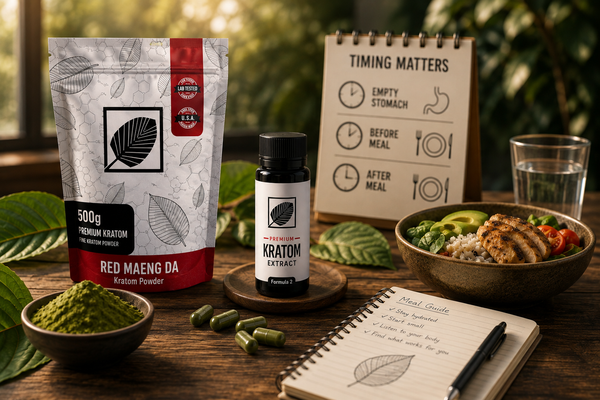
- Strain and alkaloid content: A potent strain like Red Maeng Da or a strong Green Malay can produce higher mitragynine levels per gram than milder strains.
- Body composition: Mitragynine is fat-soluble, so people with higher body fat percentages may retain it longer.
- Age and metabolism: Older adults and those with slower metabolic rates clear it more slowly.
- Hydration and kidney function: Well-hydrated users with healthy kidneys flush metabolites faster.
- Food intake: A high-fat meal can slow absorption and extend the detection window slightly.
Can You Mask Kratom on a Drug Test?
We do not recommend trying to mask, dilute, or cheat any drug test. Modern labs screen for sample adulteration (creatinine levels, specific gravity, pH, and oxidizing agents), and a flagged sample is treated as a failed test. If you are concerned about an upcoming test, the honest approach is to stop using kratom well in advance, stay hydrated, eat normally, and let your body process the alkaloids out on its own.
Will Kratom Cause a False Positive for Opiates?
Properly calibrated immunoassay tests are designed to distinguish opiates from kratom's alkaloids, so a false positive is unlikely on most modern panels. False positives have been reported in rare cases on cheaper or older assays. If you do test positive for opiates and you only use kratom, request a confirmatory GC-MS or LC-MS test, which can differentiate mitragynine from morphine, codeine, and other opiate metabolites.
Practical Guidance from Kingdom Kratom
If your job, branch, or program requires a clean kratom-targeted screen, the only reliable strategy is abstinence with enough lead time to clear your system, typically a minimum of one to two weeks for occasional users and longer for daily users. If you are subject to a standard 5-panel or 10-panel test with no kratom-specific add-on, your routine use of high-quality kratom from Kratom Capsules or loose-leaf powders should not register.
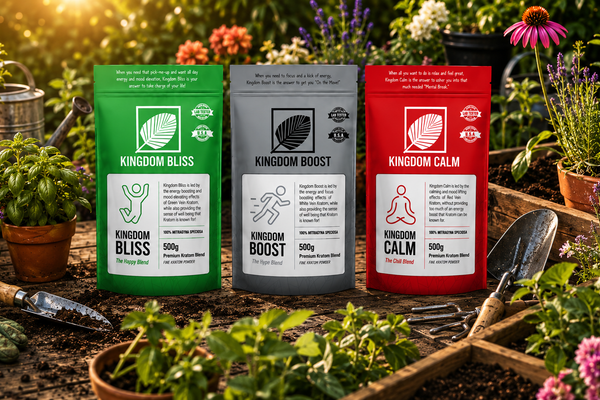
For wellness-focused users trying different strains and formats, our Kratom Sample Packs are a low-cost way to find what works for your routine. Connoisseurs looking for full-spectrum effect blends can browse our Kratom Blends collection, including Calm, Bliss, Boost, and Burst formulations.
Frequently Asked Questions
Does kratom show up on a 5-panel drug test?
No. The standard 5-panel urine test screens for THC, cocaine, opiates, amphetamines, and PCP. Kratom's alkaloids are not on this panel.
Does kratom show up on a 10-panel drug test?
Generally no. The standard 10-panel test adds benzodiazepines, barbiturates, methadone, methaqualone, and propoxyphene. Kratom is not included unless a specialized add-on is requested.
Does the military test for kratom?
Kratom is banned for active-duty service members, but it is not part of the routine military urinalysis panel. Commanders can order a targeted kratom test under reasonable suspicion. Service members should avoid kratom entirely to stay compliant.
How long does kratom stay in urine?
Roughly 1 to 9 days for occasional users and up to about 2 weeks for daily, heavy users when a kratom-specific test is used.
Can kratom cause a false positive for opiates?
Rarely on properly calibrated tests. If it happens, a confirmatory GC-MS or LC-MS test will distinguish mitragynine from true opiate metabolites.
Can probation drug tests detect kratom?
Most standard probation panels do not include kratom, but some jurisdictions have started adding kratom-specific assays. Check your probation officer's testing policy before assuming you are clear.
Disclaimer: This article is for educational purposes only and is not legal or medical advice. Kratom is reported to support relaxation, mood, and comfort in many users, but individual responses vary. Always follow the policies of your employer, branch of service, or legal program, and consult a qualified professional with specific questions about drug testing.